Facing Food Fears Eating Disorder Recovery: 5 Powerful Steps
facing food fears eating disorder recovery turning toward fear

Facing Food Fears in Eating Disorder Recovery

Facing food fears in eating disorder recovery is one of the hardest — and most essential — parts of healing. Human behavior is wired for survival: when something feels dangerous or scary, our natural instinct is to move away from it. And that instinct has kept us alive as a species.

But when it comes to eating disorders, that same survival response works against us.

facing food fears eating disorder recovery turning toward fear

Why Facing Food Fears in Eating Disorder Recovery Feels So Hard

When a food, a food group, or a social eating experience feels frightening, the instinct is to avoid it. To restrict. To move away. And in the short term, that avoidance brings relief — which is exactly what makes it so powerful and so hard to break.

But avoidance doesn’t make the fear smaller. It makes it bigger.

Over time, facing food fears in eating disorder recovery becomes more difficult the longer avoidance is practiced. What starts as avoiding one food can expand into avoiding entire food groups. Then social meals. Then the people and experiences that make life meaningful.

Research from the National Eating Disorders Association (NEDA) supports that food avoidance is one of the key maintaining factors in eating disorders — meaning the avoidance itself keeps the disorder alive, long after its original purpose has passed.

facing food fears eating disorder recovery turning toward fear

Turning Into the Slide

There’s an analogy that captures this beautifully: driving on ice in winter.

When your car begins to slide, every instinct tells you to steer away from the direction of the skid. But that’s exactly the wrong move. To straighten the wheels and regain control, you have to turn into the slide — toward the thing that’s scaring you.

Facing food fears in eating disorder recovery works the same way. The work is to do almost the exact opposite of what fear demands. To move toward the feared food, the feared restaurant, the feared social experience — not away from it.

facing food fears eating disorder recovery turning toward fear

Why Moving Toward Fear Works

The science behind facing food fears in eating disorder recovery is well established. Exposure-based approaches — the clinical term for repeatedly moving toward what frightens us — are among the most effective tools available for reducing fear responses over time.

According to the Academy for Eating Disorders, exposure work helps the brain learn that the feared stimulus is not actually dangerous, gradually reducing the anxiety response with each repeated experience.

The key word is repeated. Once is rarely enough. It takes going toward the fear over and over and over again for the brain to begin to release its grip.

facing food fears eating disorder recovery turning toward fear

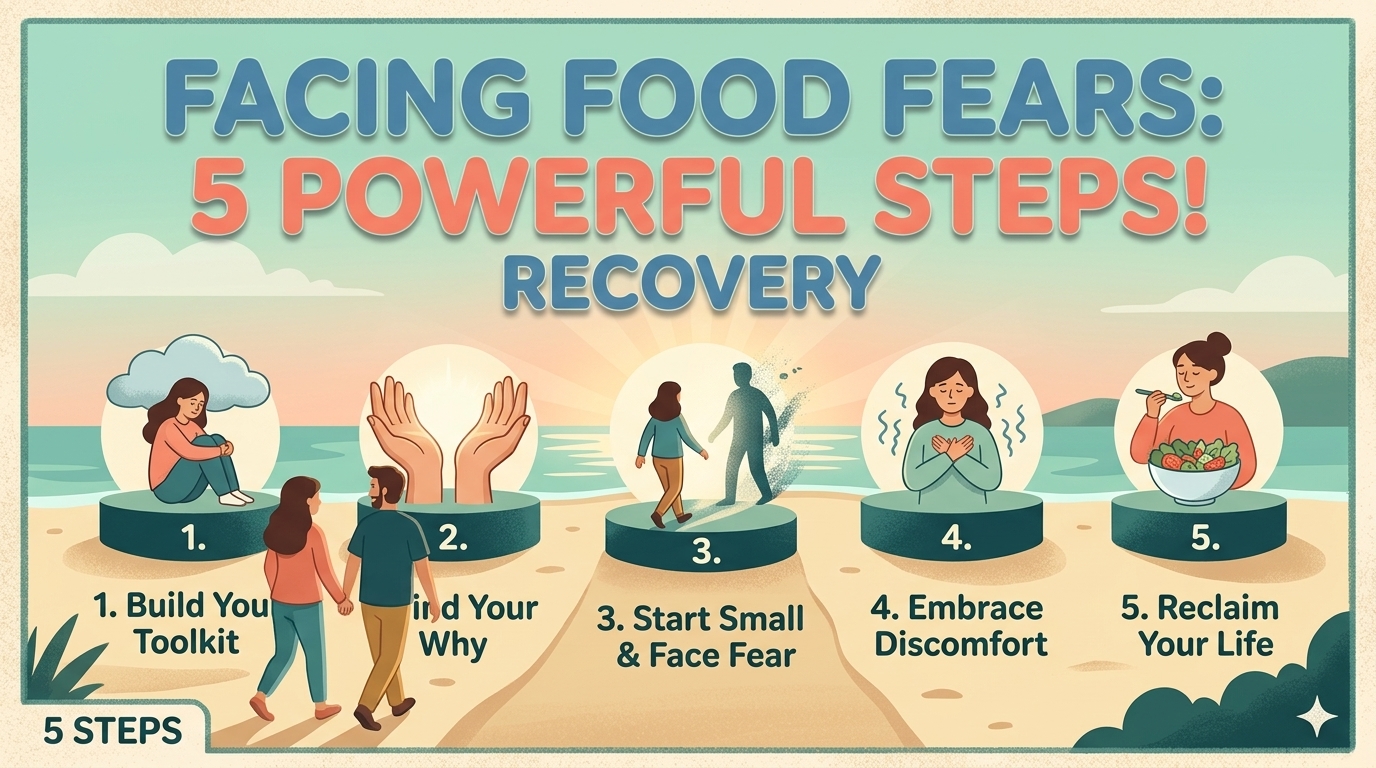
5 Powerful Steps for Facing Food Fears in Eating Disorder Recovery

1. Name the Fear Without Judgment

The first step in facing food fears in eating disorder recovery is simply identifying what you’re avoiding — and why. Not to shame yourself for avoiding it, but to bring it into the light. Fear loses some of its power when it’s named out loud.

2. Start Small and Build

Facing food fears in eating disorder recovery doesn’t mean tackling your most feared food on day one. Start with something that feels challenging but manageable. Small, repeated exposures build the confidence and evidence your brain needs to begin trusting again.

3. Do It With Support

Going toward fear is always easier with someone alongside you. Whether that’s a nutritionist, a therapist, a trusted friend, or a family member — having support during food exposures makes a meaningful difference in how the experience is processed and integrated.

4. Expect Discomfort — and Stay Anyway

Discomfort during food exposures is not a sign that something is wrong. It’s a sign that the work is happening. The goal is not to feel perfectly comfortable — it’s to stay with the discomfort long enough for the fear to begin to settle. And it will begin to settle.

5. Repeat, Repeat, Repeat

Facing food fears in eating disorder recovery is not a one-time event. The same food, the same restaurant, the same experience may need to be practiced many times before it begins to feel neutral. That’s not failure — that’s exactly how the process works.

facing food fears eating disorder recovery turning toward fear

What You’re Really Moving Toward

The goal of facing food fears in eating disorder recovery was never just about the food itself. It’s about what food avoidance was taking away — the social meals, the spontaneous dinners, the celebrations, the simple experience of eating with people you love.

Turning toward fear, one step at a time, is how you get that life back.

Stay Connected with FAB

If this was helpful in any way, we’d love for you to stay connected with FAB. Here are a few resources to explore next:

Experiencing or Witnessing Signs of an Eating Disorder?

  • Take the Self-Discovery Quiz — A quick way to reflect on your relationship with food and body, and see if FAB might be the right fit for you. Take the quiz

  • Download the Body Image Ebook — A free resource to help you better understand and navigate body image struggles. Get the ebook

  • Schedule a Consultation — Ready to talk? Book a free call with our team to explore what support could look like for you. Schedule here

For Professionals

  • Get the Clinical Quick Guide — A practical resource for professionals looking to better understand and support clients with eating disorders. Download the guide

  • Meet with Dr. Jen — Interested in a referral partnership? Find time on her calendar to connect. Schedule a meeting

Author

Back to Blog

©FAB Food & Body Program

Terms and Conditions